In
the world of plastic manufacturing, performance and cost-efficiency go hand in
hand. One of the unsung heroes behind stronger, more versatile, and more
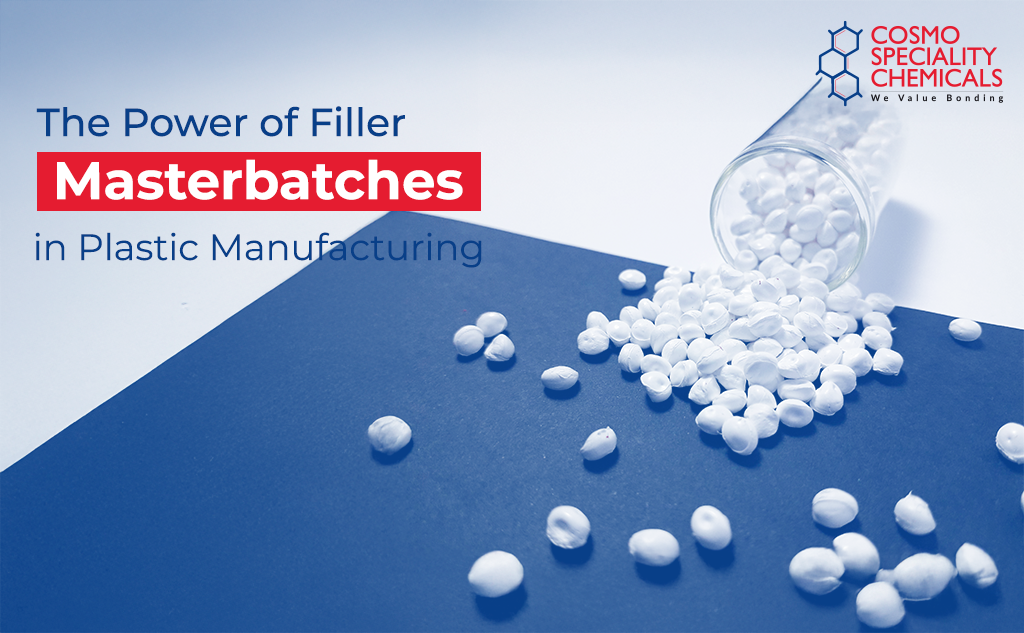
affordable plastic products is the filler masterbatch. These concentrated
pellets—made of minerals like calcium carbonate, talc, and barium sulphate—are
blended with base polymers to enhance mechanical properties and reduce
production costs.
Let’s
dive into the different types of filler masterbatches and how they transform
plastic into high-performance materials.
What
Are Filler Masterbatches?
Filler
masterbatches are a mix of finely ground mineral fillers dispersed in a carrier
resin. When added to polymers like PP, PE, or HDPE, they serve multiple
purposes:
Whether
you're manufacturing packaging, automotive parts, or industrial components,
filler masterbatches can be tailored to meet your specific needs.
Types
of Filler Masterbatches
1.
Calcium Carbonate Masterbatch
A
popular choice for rigid plastics, calcium carbonate (CaCO₃) masterbatch boosts
stiffness, opacity, and impact resistance. It’s widely used in packaging and
injection molding, offering both performance and cost savings.
2.
Talc Masterbatch
Talc-based
masterbatches improve heat resistance and dimensional stability. Ideal for
automotive and electrical applications, they also help reduce material costs by
replacing more expensive resins.
3.
Barium Sulphate Masterbatch
Need
heavier, flame-retardant plastics? Barium sulphate (BaSO₄) masterbatch
increases density and reduces flammability, making it perfect for high-density
polyethylene (HDPE) products.
4.
Mica Masterbatch
For
plastics that need to shine—literally—mica masterbatch adds a pearlescent or
shimmering effect. It enhances visual aesthetics without the need for
additional coatings.
5. Silica Masterbatch
Silica
fillers reinforce plastic, improving wear resistance and flame protection.
These masterbatches are commonly used in demanding industrial applications.
6.
Nano Fillers
Nano-sized
fillers like nano silica offer superior mechanical and barrier properties.
They’re ideal for high-performance films and advanced packaging solutions.
7.
Biodegradable Fillers
Eco-conscious
manufacturing is on the rise. Biodegradable filler masterbatches, made from
starch or PLA, help plastics break down more easily in natural
environments—reducing long-term environmental impact.
Why
It Matters
Filler
masterbatches aren’t just about improving plastic—they’re about engineering
smarter materials. Whether you're aiming for durability, sustainability, or
aesthetic appeal, choosing the right filler masterbatch can make all the
difference.
Looking
to optimize your plastic production? Explore the world of filler masterbatches
and unlock new possibilities in performance and design.
What
Does Cosmo Speciality Chemicals Manufacture?
Cosmo
Speciality Chemicals (CSC) is your one-stop destination for innovation-driven
solutions in the plastics industry. With a strong commitment to quality and
sustainability, CSC stands as one of India’s leading manufacturers and
suppliers of PP and PE-based masterbatches.
Our
masterbatches are engineered to meet evolving customer needs—enhancing product
performance, reducing environmental impact, and optimizing production
efficiency.
📞 Connect with a Cosmo Chemicals Expert today to explore the right solution for your needs!
1. What is a filler masterbatch?
A filler masterbatch is a concentrated blend of mineral fillers dispersed in a polymer carrier resin to improve plastic performance and reduce production costs.
2. Why are filler masterbatches used in plastic manufacturing?
They enhance mechanical properties, improve process efficiency, and lower raw material costs.
3. Which polymers are commonly used with filler masterbatches?
Filler masterbatches are commonly used with PP, PE, HDPE, LDPE, LLDPE, and other thermoplastics.
4. What are the benefits of calcium carbonate masterbatch?
It improves stiffness, opacity, dimensional stability, and surface finish while reducing overall material costs.
5. What applications use calcium carbonate filler masterbatch?
It is widely used in shopping bags, woven sacks, films, injection-molded products, household goods, and packaging applications.
6. What is talc masterbatch used for?
Talc masterbatch improves heat resistance, rigidity, and dimensional stability in plastic products.
7. How does barium sulphate masterbatch improve plastics?
It increases density, enhances brightness, and improves surface smoothness.
8. What are the advantages of mica masterbatch?
Mica masterbatch provides a pearlescent appearance along with improved dimensional stability and mechanical properties.
9. What is silica masterbatch?
Silica masterbatch improves abrasion resistance, strength, thermal performance, and durability.
10. What are nano filler masterbatches?
Nano filler masterbatches contain nano-sized particles that provide superior barrier properties and enhanced mechanical performance.
11. Are filler masterbatches environmentally friendly?
Many filler masterbatches help reduce polymer consumption and support more sustainable plastic manufacturing.
12. Do filler masterbatches affect product strength?
Yes. Depending on the formulation, they can improve rigidity, tensile strength, and impact resistance.
13. Can filler masterbatches reduce manufacturing costs?
Yes. They lower production costs by replacing a portion of virgin polymer with cost-effective mineral fillers.
14. What is the ideal filler masterbatch loading percentage?
Typical loading levels range from 5% to 50%, depending on the application and required performance.
15. Are filler masterbatches suitable for injection molding?
Yes. They are widely used to improve stiffness, dimensional accuracy, and cost efficiency in injection molding applications.
16. Can filler masterbatches be used in blown film applications?
Yes. Specialized grades are available for blown film manufacturing.
17. Do filler masterbatches affect plastic color?
Most filler masterbatches increase opacity and brightness, depending on the filler type and loading level.
18. How do filler masterbatches improve dimensional stability?
Mineral fillers help reduce shrinkage and warpage during processing.
19. What industries commonly use filler masterbatches?
Packaging, automotive, agriculture, construction, consumer goods, textiles, and electrical industries commonly use filler masterbatches.
20. How do I choose the right filler masterbatch?
The right choice depends on the polymer type, processing method, application requirements, and cost targets.
21. Can Cosmo Speciality Chemicals develop customized filler masterbatches?
Yes. Cosmo Speciality Chemicals offers customized filler masterbatch solutions tailored to specific processing and performance requirements.
22. What is a pearlised masterbatch?
A pearlised masterbatch is a specialized filler masterbatch used to produce pearl-white, opaque BOPP films with reduced density and improved yield.
23. Are pearlised masterbatches considered filler masterbatches?
Yes. Most pearlised masterbatches are based on mineral fillers such as calcium carbonate and are classified as specialty filler masterbatches.
24. What are the benefits of calcium carbonate-based pearlised masterbatches?
They reduce BOPP film density, improve opacity, enhance aesthetics, increase yield, and lower packaging costs.
25. What is CosmoAddTM PL70 used for?
CosmoAddTM PL70 is a high-quality calcium carbonate based pearlising masterbatch designed to produce pearlised BOPP films for cost-sensitive packaging applications. It helps achieve lower film density, excellent opacity, and improved cost efficiency.
26. What is CosmoAddTM PL70XG used for?
CosmoAddTM PL70XG is a calcium carbonate based pearlising masterbatch developed for producing high gloss pearlised BOPP films with enhanced shelf appeal and cost efficiency.
27. Which packaging applications can benefit from CosmoAddTM PL70 and PL70XG?
These masterbatches are suitable for confectionery packaging, snack food wrappers, labels, overwrap films, decorative packaging, and general-purpose pearlised BOPP film applications.
28. How do pearlised BOPP films reduce packaging costs?
Their micro-voided structure lowers film density, enabling higher film yield per kilogram of polymer while maintaining performance and appearance.
29. What is the difference between CosmoAddTM PL70 and PL70XG?
CosmoAddTM PL70 is optimized for high-quality pearlised BOPP films with lower density, while CosmoAddTM PL70XG is specifically designed to deliver a high gloss pearlised finish for premium packaging applications.
30. Why choose Cosmo Speciality Chemicals for filler masterbatches?
Cosmo Speciality Chemicals offers high-performance PP and PE-based masterbatch solutions, technical expertise, product consistency, and customized formulations to meet diverse application requirements.
Featured Post
How Additive Masterbatches Enable High-Performance Plastics?